Drive along almost any road and you can read the history of its planting in the trees themselves. One stretch has a row of limes with crowns closing neatly overhead; a few hundred metres on, the same species sulks in the verge, half of them dead, the survivors leaning away from the kerb. The difference is rarely luck, and almost never the trees. It is a handful of decisions made in the first hour on site — decisions that are easy to get right and surprisingly easy to get wrong.
Planting too deep, and burying the root flare
If you only fix one thing, fix this. Most trees that die in their first five years were planted too deep, and the damage is almost invisible at the time. A tree should go into the ground at the same level it grew in the nursery, with the root flare — the point where the trunk widens into the roots — clearly visible above the soil surface. Bury that flare and the trunk stays permanently damp, bark begins to rot, and the roots grow upwards in search of air instead of outwards for stability.
The mistake usually happens in stages. The pot looks taller than it is, so the hole gets dug a little deeper than needed. The soil at the bottom is loose, so the root ball settles. Then the mulch goes on, and a mound of it gets pushed against the trunk for tidiness. Add those three things together and a tree can end up four or five centimetres lower than intended.
How to get it right:
- Dig the hole wider than you think necessary and no deeper than the root ball. Two to three times the width is not excessive.
- Set the tree on undisturbed soil, not loose backfill, so it cannot sink.
- Measure from the root flare, not the top of the pot. Scrape away the surface compost in the container until you find where the trunk actually starts to flare.
- Plant slightly high if your soil is heavy. A tree sitting two centimetres proud will settle; one sitting low will not rise.
- Keep mulch in a flat ring around the tree, never touching the bark, and pull it back each autumn when you check the flare.
A tree in the perfect spot, planted too deep, will fail. A tree in a difficult spot, planted correctly, often surprises you.
Ignoring clearance: overhead, sideways and below ground
Clearance mistakes are the ones you inherit rather than make. A young tree takes up very little room, and it is tempting to fill a gap in the verge without looking up. Fifteen years later, the crown is in the overhead cables, the branches are scraping buses, and the streetlight is throwing light into the canopy instead of onto the road.
Before you choose a spot, stand still and look in four directions. Look up for cables and wires. Look along the road for sight lines at junctions, bends, driveways and pedestrian crossings — a shrub is fine there, a mature oak is not. Look at the footway and check how much headroom the crown will need to leave for people walking and cycling. Look down at the kerb and ask how far the trunk needs to be set back so the root plate and the paving can coexist.
Below ground matters just as much. Service pipes and cables, land drains, and the compaction of a verge that has been used as a builders' car park for a decade will all shape what is possible. Check service plans before anyone puts a spade in the ground, and if you are digging anywhere near buried services, stop and get the relevant utility owner involved.
Two details that are easy to forget on a roadside. First, the strip nearest the carriageway takes the worst of the salt spray and plough throw in winter, so choose tolerant species and plant further back where you can. Second, leave room for the road itself. Verges get widened, kerbs get moved, and paths get resurfaced. A tree planted tight against the kerb is a tree that will one day be in someone's way.
Treating the planting hole as the whole job
A common site is a wide, hard verge with a beautifully dug hole in it. The tree is fine for two years and then stalls. The problem is that the hole is a bucket in a concrete floor: the roots have nowhere to go once they reach the sides. Breaking up the walls of the pit, and loosening a much wider area of ground, matters more than what you put in the hole.
Resist the urge to fill the pit with rich compost. Roots that find a pocket of lovely material tend to stay in it, circling as they would in a pot, instead of pushing out into the surrounding soil. Use the soil you dug out, mixed with a little organic matter if it is genuinely poor, and firm it in layers as you backfill so there are no air pockets.
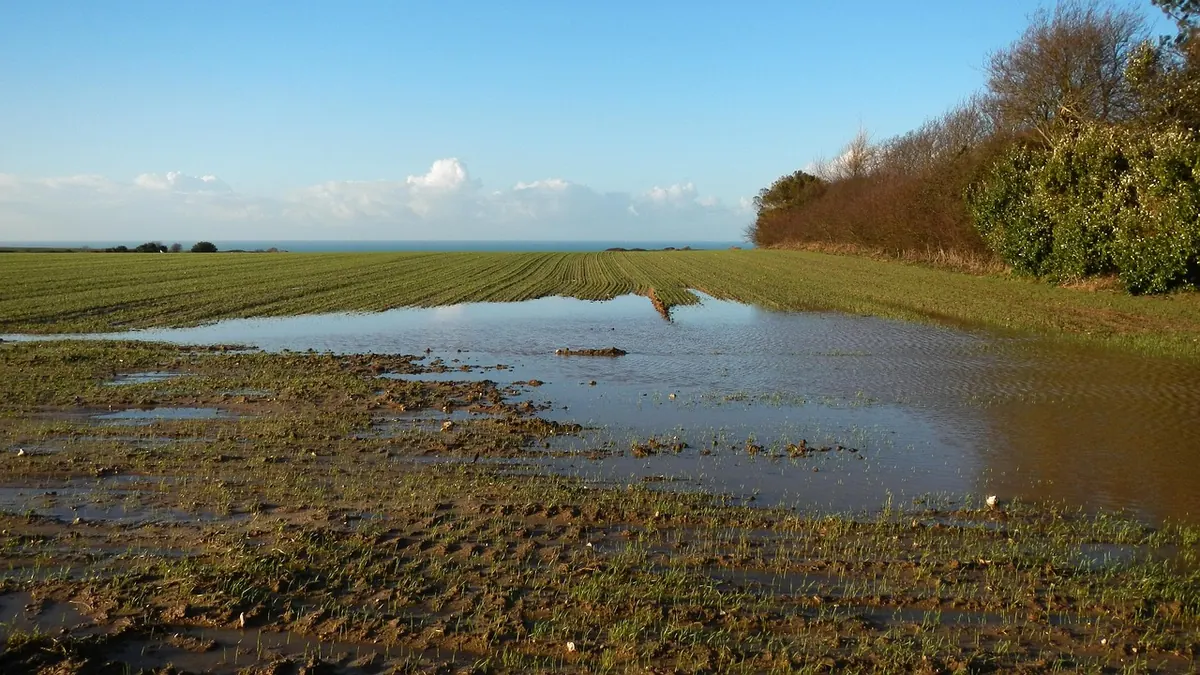
Check drainage before planting. Fill the hole with water and see how long it takes to disappear. If it is still full the next morning, you have a drainage problem that will drown the roots, and no amount of careful planting will fix it — choose a different spot, or plant on a raised mound. And keep your feet off the root zone while you work. A plank across the pit is cheaper than a dead tree.
Choosing a tree that cannot do the job
Roadside conditions are not gentle. Reflected heat from asphalt, wind funnelled between buildings, de-icing salt, drought in summer and waterlogging in winter all act on the same tree. A species that thrives in a sheltered garden may simply not be suited to a windswept verge, and no amount of watering will change that.
Match the tree to the space at maturity, not to the size it is on the day you buy it. Ask about salt and drought tolerance, soil preference, and how the species handles exposure. Think about litter as well: fallen fruit on a footway is a slip hazard and a complaint waiting to happen, and thorny species planted beside a cycle path cause problems for years.
When you buy, look at the roots rather than the crown. A modest tree with a well-formed root system and a clean, single leader will outperform a tall specimen that has spent three years circling in a pot. Check for girdling roots at the base of the trunk and reject stock with a kinked or damaged stem.
Rushing the day itself, then walking away
Handling on the day matters. Bare-root trees need their roots kept damp and out of the wind from the moment they are lifted to the moment they are in the ground. Container-grown trees need the pot removed, the top of any burlap cut away, and the root ball gently loosened so roots are not left in the shape of the pot.
Plant in the dormant season, when the ground is workable but not frozen or waterlogged. Skip fertiliser at planting — it encourages soft growth before the roots can support it. Prune only damaged or broken branches. Stake only if the site is exposed or the tree is large enough to rock, use a flexible tie that allows some movement, and plan to remove the stake after a couple of seasons so the trunk can thicken properly.
The first three years decide the rest
Establishment is where roadside planting is quietly lost. Young trees need deep, occasional watering through dry spells rather than a daily sprinkle, a weed-free ring so grass and nettles are not competing for the same moisture, and a mulch layer topped up each spring. Check ties and guards every year — a tie that has bitten into the bark has done more harm than the wind it was meant to stop.
Strimmers and mowers kill more young roadside trees than drought does. A guard, a mulch ring and a quiet word with whoever cuts the verge will save you a replacement programme.
A short checklist before the spade goes in
- Confirm the root flare and mark the planting level on the trunk.
- Look up for cables, along the road for sight lines, and down for services.
- Check the space the tree will need at maturity, not today.
- Test drainage, and widen the pit rather than deepening it.
- Keep roots damp and out of the wind until the moment of planting.
- Backfill with the site soil, firm in layers, and water in properly.
- Mulch in a flat ring, clear of the bark.
- Stake only if needed, and diarise the date to remove the ties.
None of this is difficult. It is simply a sequence of small, deliberate choices — and the trees will tell you, ten years from now, whether you made them.
Photo: Raimun / Pixabay